
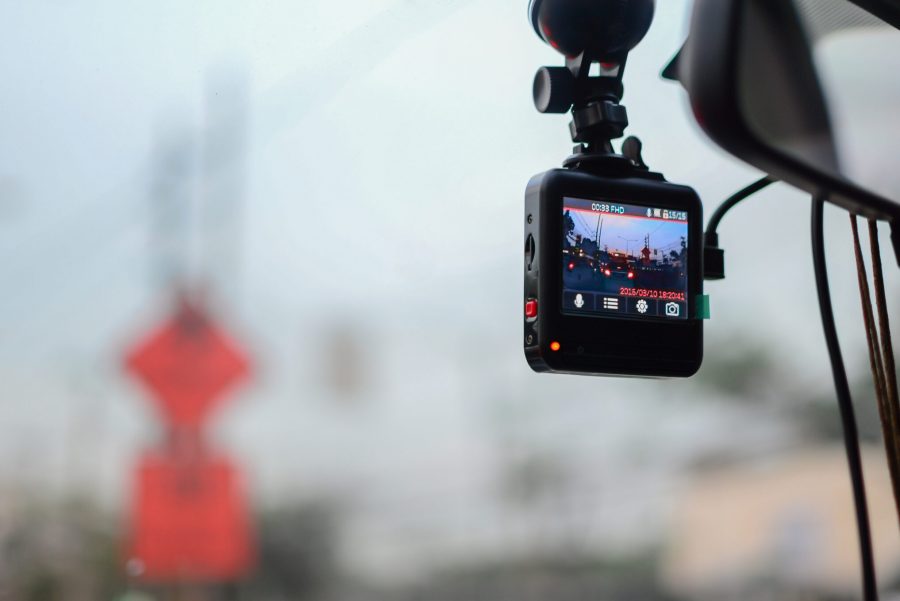
Dash cams can provide objective evidence in all motor vehicle cases, including car accident cases. A single 30-second video clip can help settle a case that might otherwise take months of disputes. These tools can provide evidence of what took place in the moments leading up to the incident and clearly identify the at-fault party. Having any dash cam in your vehicle is better than not having one at all.
Get help with your New York car wreck claim today by scheduling a free consultation with Richmond Vona. Our dedicated legal team can review your case, answer your questions, and begin the process of pursuing fair compensation.
Understanding What a Dash Cam Records
Dash cams capture several key components of a car accident that can largely impact the decisions of insurers and attorneys
The Moment of Impact
The exact moment a collision occurs is often brief, and those involved have little time to process it. A dash cam provides you with playback material of these critical seconds. It can reveal relative positions, speed indicators such as skid marks, the distance between vehicles, and who initiated the accident.
The at-fault party’s insurance company is not on your side and will attempt to minimize a settlement. However, with dash cam footage of the incident, it becomes much more difficult for them to dispute or deny the obvious. For instance, if a negligent driver runs a red light and hits your passenger side, dash cam footage shows the traffic signal, the timing, and the impact.
Road Conditions and Context
In addition to the actual accident, a dash cam can capture the road conditions at the time of the incident. Weather, visibility, road surface, and lighting can all affect the outcome of a claim. This is especially relevant in a state like New York, which deals with ice, snow, and poor visibility during lake effect. For example, an accident report that states “black ice caused you to skid” is much different from “you were speeding.”
Driver Behavior Before the Accident
A driver’s actions in the moments before an accident can help explain how it occurred. Dash cam footage may capture conduct supporting a negligence claim, including unsafe lane changes, drifting between lanes, sudden braking or acceleration, and, in some cases, phone use.
Even in accidents that seem straightforward, video may reveal details that affect how fault is assigned. For example, although a rear-end collision generally creates an inference that the rear driver was negligent, footage could provide a nonnegligent explanation or show that another driver caused or contributed to the crash. That context may be especially important under New York’s 2026 Money in Your Pockets reforms, which can bar recovery when an injured person bears the greater share of fault. Every accident is different, and dash cam video can provide important context for determining who was at fault or whether multiple drivers share responsibility.
License Plates, Vehicle Description, and Witness Details
Dash cam footage can also capture details such as license plates, vehicle colors, and makes, and any visible damage. This can be the difference between a successful and an unsuccessful case, especially when the accident involves a hit-and-run driver. Your attorney can also use video to identify potential witnesses who may be able to supply testimony for your case.
Camera Coverage and Recording Quality
Dash cams do not all capture the same view. A single-channel camera typically records one direction, often the road ahead, while dual- or multichannel systems may record behind the vehicle or inside the cabin. Camera placement and field of view determine how much of the scene appears in the footage.
Also, resolution, frame rate, low-light performance, glare, and motion blur can affect whether footage shows details such as license plates, traffic signals, or vehicle movements. An attorney can investigate those possible sources and request that recordings be preserved, but additional footage may not exist, may be inaccessible, or may have already been overwritten.
Footage Storage and Camera Maintenance
How long dash cam footage remains depends on the device, memory card capacity, recording quality, number of cameras, settings, and cloud or external backup options. Many dash cams use loop recording, which overwrites the oldest unsaved footage when storage becomes full. After an accident, drivers should promptly protect the recording and save an unedited copy to a separate, reliable storage location. They should also preserve clips that show events before or after the collision.
How Can Dash Cam Footage Affect Your Insurance Claim After a Car Accident?
One of the greatest benefits of dashcam footage is that it minimizes the back-and-forth of insurance disputes. Visual evidence, such as videos and photos, helps remove ambiguity, which often leads to lower settlements. The settlement process can move along faster, and with the evidence provided, your payout could be much larger.
Fast-Tracks Your Settlement
When an accident claim is wholly based on he-said/she-said statements, the overall settlement process can take weeks, even months, to conclude. Your attorney may have to rely on more extensive evidence-gathering, such as accident reconstructions and witness interviews. An insurance adjuster can typically determine who was at fault with video footage alone.
Increases the Final Payout
If there is room for dispute over what took place, insurers often use it as an opportunity to lowball settlement offers. Weak evidence makes it much easier for them to push back against fair compensation since they expect the injured party not to fight back as much. However, with dashcam footage, no vague assumptions or statements are being made. Insurers will not attempt to dispute clear liability because they know a jury would see the same thing.
The Significance of Dash Cam Footage for Liability
New York’s 2026 motor vehicle insurance reforms, promoted as the Money in Your Pockets affordability agenda, changed several rules affecting accident claims. Among other changes, the law adopted a modified comparative negligence standard for certain motor vehicle cases and revised the state’s definition of serious injury. It also created a limited cap on noneconomic damages for some at-fault drivers, rather than a general cap on pain-and-suffering awards.
Because fault can have a greater effect on whether an injured person may recover compensation, evidence showing how a crash occurred may be especially important. Dashcam footage can help document vehicle movements, traffic signals, and other events leading up to a collision. However, video is only one form of evidence, and insurers may still dispute liability, causation, or the extent of the claimant’s damages.
Dash Cam Footage in Uninsured or Hit-And-Run Incidents
Hit-and-run accidents are usually more complex than other crashes. Under New York’s 2026 Money in Your Pockets law, uninsured motorist cases have additional limits on non-economic damages. Video evidence in an uninsured motor vehicle claim may be your strongest leverage against the new caps.
Without it, you often face two challenges: proving the accident occurred and dealing with reduced recovery limits. Dashcam footage from a hit-and-run can record license plates, identify the fleeing vehicle, and show the direction the driver took.
Laws Involving Dash Cams in New York
Dash cams are legal in New York, but drivers should follow a few basic rules when using one.
- Windshield mounting: Per New York Vehicle and Traffic Law § 375, you can mount a dash cam on your windshield as long as it does not block your view of the road. Many drivers place the camera behind or next to the rearview mirror to keep it out of their line of sight. New York’s Vehicle and Traffic Law prohibits objects on the windshield that interfere with a driver’s visibility.
- Audio recording: New York follows a one-party consent rule for audio recordings. If your dash cam records sound inside the vehicle, the recording is generally legal as long as at least one person involved in the conversation consents. If you are the driver, your own consent is usually enough.
- Avoid obstructing your view: No matter where you mount your dash cam, it should not interfere with your ability to see the road safely. A camera that blocks your vision could violate New York’s windshield obstruction law and create a safety risk.
Speak With Richmond Vona About Dash Cams and Your Car Accident Case
Whether you have dash cam footage or not, you may still have a strong car accident claim. Video can help explain how a crash happened, but it is only one piece of the evidence. If you were injured because of someone else’s negligence, the skilled attorneys at Richmond Vona can review the facts of your case, explain your legal options, and help you pursue the compensation you may be entitled to. Contact our law office today at 716-500-5678 to schedule a free consultation.
