
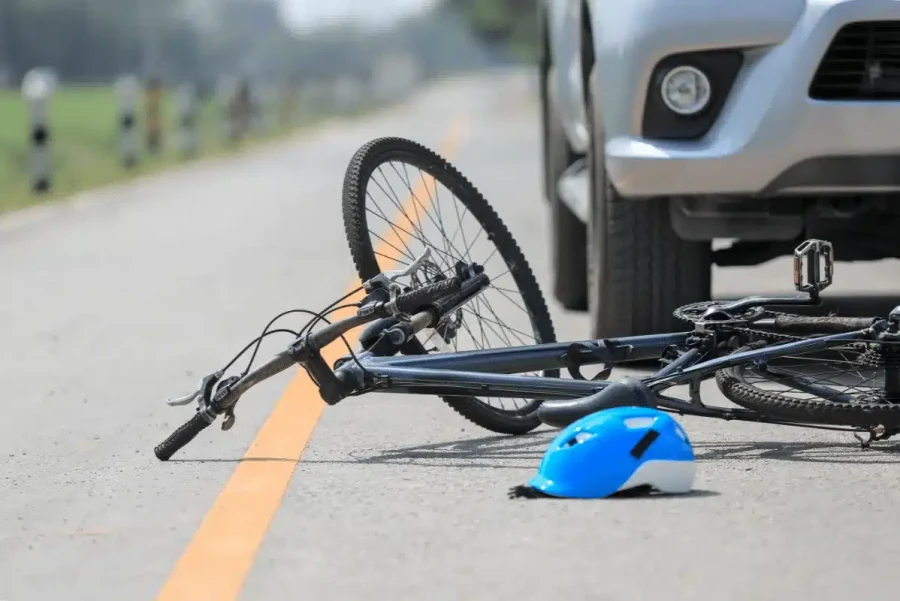
Typically in New York State, a helmet is required when operating a motorized vehicle. The details of who must wear a helmet vary depending on your specific circumstances. Aside from the legal requirements, wearing a helmet while you’re on a bike, motorcycle, or e-scooter can help you in the unfortunate circumstance that you are in an accident. Additionally, wearing a helmet, especially when legally required, can play a role in liability in your case.
- Bicycles: Helmets required for children under age 14
- Motorcycles: Helmets required for all riders and passengers
- Scooters: Helmets not required if maximum speed is below 20mph
Motorcycle Helmet Laws Simplified
The New York motorcycle helmet law requires that all riders and passengers wear a helmet while operating a motorcycle anywhere in the state. In fact, New York was the first state in the nation to have a universal helmet law. There are no circumstances where riders and passengers do not have to wear a helmet.
Motorcycle Helmet Standards
The laws also require helmets to meet the standards outlined in Section 571.218 of the federal motor vehicle safety rules. Some of these include:
- No rigid projections inside the helmet shell and none that protrude more than 0.2 inches from the outer helmet
- The DOT symbol must be located between one to three inches from the bottom of the helmet
- Peripheral vision clearance of at least 105 degrees
- A continuous protective curved surface
Additional Motorcycle Safety Requirements
In addition to the New York helmet law, motorcyclists must comply with the following safety requirements, which align with federal guidelines and sometimes exceed them:
- Adequate front and rear brakes that can control the motorcycle at all times.
- A bell, horn, or similar signaling device.
- Red to amber tail lights that remain lit while the motorcycle is in use.
- An approved white or yellow headlight that remains lit at all times while the motorcycle is in use and is visible for at least two hundred feet.
- If used in conjunction with headlights, reflectors that have polished silver glass-reflecting surfaces or surfaces that otherwise intensify the headlight.
- Reflector surfaces that are “substantially free” of rust, dirt, and other imperfections that could diminish their effectiveness.
- Handlebars and grips at or below the rider’s shoulders.
- Approved goggles or face shields worn at all times.
- Adjustable rear-view mirrors.
- Windscreens approved by the state commissioner, if used.
Law enforcement reserves the right to inspect motorcycles to ensure compliance with all safety laws. It is illegal in New York to sell helmets, goggles, or face shields that do not comply with federal and state regulations.
Bicycle Helmet Laws
New York State law requires kids under age 14 to wear a helmet when biking to safeguard children from head injuries if they’re in a bicycle accident. Although, wearing a helmet is not mandatory for anyone over 14 years old, it is strongly encouraged.
Motorized Scooter Helmet Laws
On certain smaller motorbikes, including motorized scooters or scooters with pedal-assist, it is recommended to wear a helmet, but not required. This depends on the engine size and how fast the motor vehicle can go. If the scooter’s maximum speed is below 20 miles per hour, New York motorcycle helmet laws do not apply.
E-Bike and E-Scooter Helmet Laws
While helmets are always recommended, if you’re under 18, you’re required to wear one on an e-bike or e-scooter in New York. Those under 16 cannot operate an e-bike or an e-scooter in New York. For a Class 3 e-bike or e-scooter, you are required to wear a helmet in New York State. It’s also important to keep the manufacturer sticker on your e-bike or e-scooter that lists the classification, as it’s legally required.
- Class one bicycle with electric assist: A bicycle with electric assist having an electric motor that provides assistance only when the person operating such bicycle is pedaling, and that ceases to provide assistance when such bicycle reaches a speed of twenty miles per hour.
- Class two bicycle with electric assist: A bicycle with electric assist having an electric motor that may be used exclusively to propel such bicycle, and that is not capable of providing assistance when such bicycle reaches a speed of twenty miles per hour.
- Class three bicycle with electric assist: Solely within a city having a population of one million or more, a bicycle with electric assist having an electric motor that may be used exclusively to propel such bicycle, and that is not capable of providing assistance when such bicycle reaches a speed of twenty-five miles per hour.
Legal Consequences of Not Wearing a Helmet
If you are caught violating the New York helmet law, the police may pull you over and issue a ticket. You could face a $100 fine, 30 days in jail, or both. There are no exceptions to New York’s universal helmet law.
Can I Still File a Claim For an Accident if I Wasn’t Wearing a Helmet?
Yes. You can file a personal injury claim if you are injured in a motorcycle or bicycle crash because of someone else’s negligence, regardless of whether you were wearing a helmet. If you sustain a head injury in an accident while not wearing a helmet, you may still be able to recover compensation.
How Will Not Wearing a Helmet Affect My Compensation?
Not wearing a helmet can reduce your compensation even if you didn’t cause the accident. Under New York’s comparative negligence law, an insurance company may argue that your injuries were worse because you violated New York’s helmet law, and assign you a share of fault for the severity of your injuries.
What to Do If You're Injured While Riding Without a Helmet
If you’re injured in an accident while riding without a helmet in New York, follow these steps:
- Seek Medical Attention: Your health and safety should always come first. Seek medical attention immediately, even if you don’t think your injuries are that bad. TBIs can present with mild symptoms and, in worst-case scenarios, become catastrophic hours or days later.
- Document the Accident: Take pictures of the accident scene, including any visible injuries and property damage if possible. Get contact info from any witnesses who saw the accident occur. Even if you weren’t wearing a helmet and the accident wasn’t your fault, it’s important to document this. As proving fault becomes more important with 2026 legislation changes, documentation is becoming more important.
- Talk to a Personal Injury Attorney: An experienced NY personal injury attorney can help you understand your rights and options. They can evaluate the circumstances of your case and let you know the best way to proceed. It’s best in a case to talk to an attorney after seeking medical care and before talking to insurance.
