
Mental Health Impact of Dog Bites in Children
Dog bites are often considered a physical injury: a wound, a scar, a bandage. But for many, particularly children, the story doesn’t stop there. Many parents, teachers, and even doctors sometimes overlook the invisible scars that stay hidden in a child’s mind long after the bandage is gone.
Children who experience a dog bite can develop a wide range of psychological issues. Symptoms such as post-traumatic stress disorder (PTSD), nightmares, and even ongoing struggles with anxiety or depression can interfere with schoolwork, friendships, and family life. According to a review of the psychological effects of dog bites in children published in the National Library of Medicine, more than 70% of children seen after dog bite incidents displayed concerning behavioral or emotional symptoms that needed further attention.
That means most child dog bite survivors aren’t just dealing with a scratch or a scar. They’re carrying around trauma that, if left untreated, could follow them into adulthood.
If your child was injured by a dog in New York or you lost a child after a severe attack, your family has options. Decisions made early—witness statements, preserving evidence, timing—can make or break a claim.
- Why Dog Bites Affect Kids Differently
- Unpacking the Psychological Effects: What a Child May Experience
- Warning Signals: When to Raise the Alarm
- What May Trigger a Relapse?
- How Long-Term Trauma Can Affect a Child’s Future
- Prevention & Preparing Safer Dog-Child Interactions
- Healing Together: Therapy, Counseling and Support Strategies
- How Parents, Communities, and Systems Can Do Better
- Richmond Vona Is Here To Support You After Your Dog Bite Accident


Why Dog Bites Affect Kids Differently
When a child is bitten, the immediate focus is often the wound: cleaning, stitches, and antibiotics. That’s necessary. But what follows is less visible and often ignored.Children don’t always have the mental or emotional tools adults do to compartmentalize traumatic events. That means the fear, the shock, the “something bad happened” imprint can settle into the psyche.
The most common psychological consequences include post-traumatic stress disorder, dog phobia, nightmares, and symptoms of anxiety, with other supporting studies underscoring that these effects can persist long after the physical healing. In some settings, researchers even point to social inequalities in dog bite incidents and outcomes. Children in poorer neighborhoods may face greater risk and potentially fewer supports in recovery.
Unpacking the Psychological Effects: What a Child May Experience
Let’s dive deeper into how these psychological effects can manifest over time, with nuance, and in varied forms.

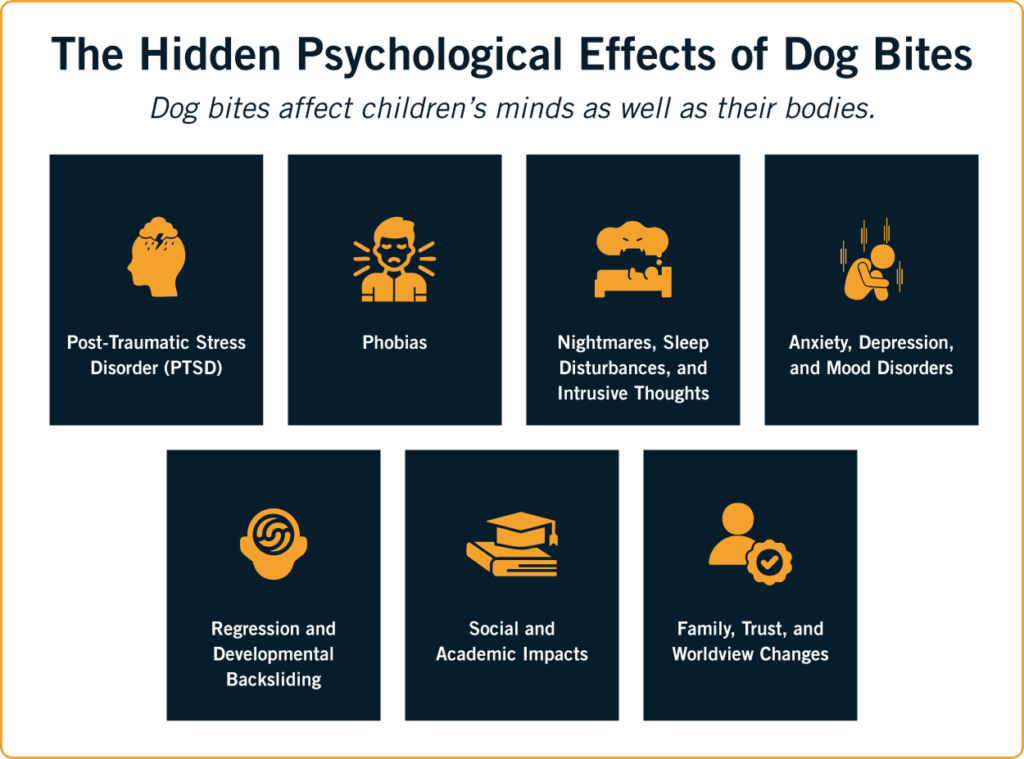
Post-Traumatic Stress Disorder (PTSD)
PTSD is one of the most serious long-term outcomes. Children may relive the attack in nightmares or flashbacks. They might avoid places or situations that remind them of dogs, or become hypervigilant—always scanning for danger, even when none exists.
The trauma may be triggered by a barking dog, the place of the bite, or even memories that pop up unexpectedly. Researchers have found that symptoms sometimes emerge weeks or months after the event.

Phobias
One of the more commonly documented effects is a dog phobia, or an intense, irrational fear of dogs. Research shows many children begin to avoid any interaction with dogs, parks, or even routes they once walked that had dogs nearby.
That fear can generalize—leading to avoidance of other animals or open spaces, or even social avoidance if the child worries other kids might bring pets over.

Nightmares, Sleep Disturbances, and Intrusive Thoughts
Nightmares, trouble falling asleep, tossing and turning, waking frequently—these are all common. The traumatic event can “visit” the child in dreams. Intrusive thoughts, images, or memories seeping into daily life unbidden are part of the PTSD spectrum.
When sleep suffers, other problems follow: irritability, concentration issues, and mood swings.

Anxiety, Depression, and Mood Disorders
A dog bite may trigger or exacerbate mood disorders such as anxiety or depression. Children might become withdrawn, lose interest in activities, or show signs of sadness or irritability. Guilt, anger, low self-esteem, and feelings of vulnerability are common emotional effects.
If left unaddressed, these patterns may entrench themselves in their behavior, particularly during early developmental years.
Regression and Developmental Backsliding
Younger children may “go back,” or regress into old, emotional habits such as thumb sucking, bedwetting, wanting constant parental attention, or clinginess. This regression is often an unconscious attempt to regain a sense of safety and control.

Family, Trust, and Worldview Changes
While trauma can alter a child’s sense of safety and trust in the world around them, it doesn’t impact them alone. Children who’ve been bitten can not only develop a fear of animals in general, but a distrust of environments, caregivers, or other kids—even siblings. Significant attention to one child’s needs may cause siblings to feel neglected or ostracized. Parents may feel guilt, anxiety, and hypervigilance.

Social and Academic Impacts
School performance may suffer. Focus and attention can drift when a child is preoccupied with fear or stress. Peer interactions may change: withdrawing from play, refusing to go to a friend’s house with a dog, or feeling “different.” A child might miss school because of anxiety or nightmares.
When a sudden shift in grades, attendance, or classroom behavior occurs, teachers and school counselors may see changes without realizing why.
Warning Signals: When to Raise the Alarm
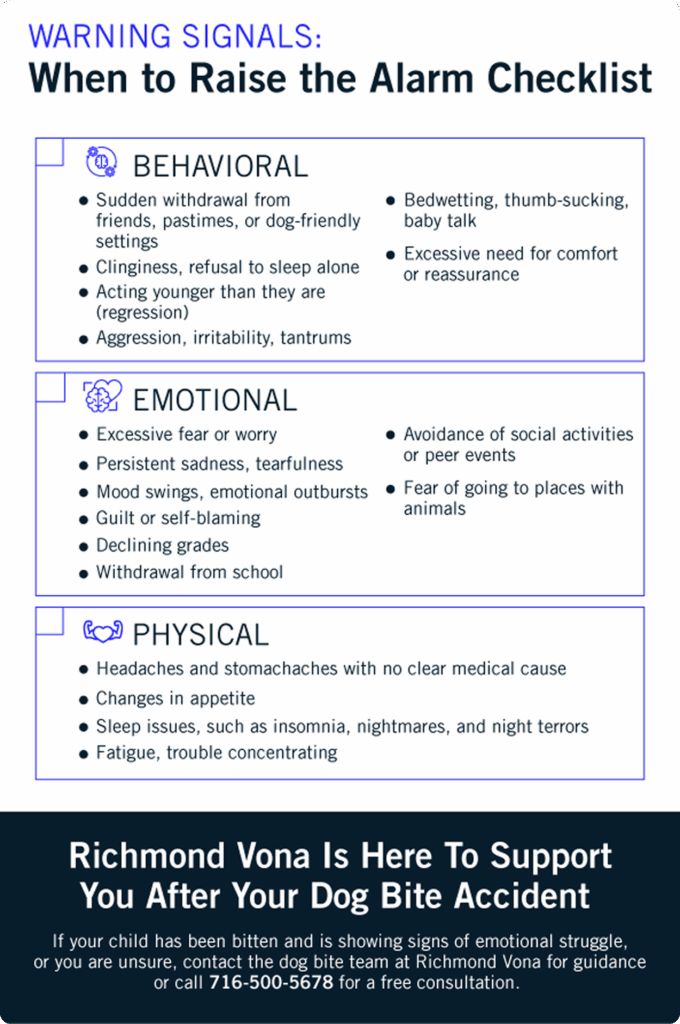
It’s important to recognize the early signs of trauma in children after a dog bite. Some signs are subtle, others more obvious—awareness is key, as early detection improves outcomes. Here are some signs to keep an eye out for:
If you notice several of these persisting for weeks or months after the bite, that’s a red flag that your child might benefit from professional support.
Behavioral shifts
- Sudden withdrawal from friends, pastimes, or dog-friendly settings
- Clinginess, refusal to sleep alone
- Acting younger than they are (regression)
- Aggression, irritability, tantrums
Emotional or mood changes
- Excessive fear or worry
- Persistent sadness, tearfulness
- Mood swings, emotional outbursts
- Guilt or self-blaming
Physical or psychosomatic signs
- Headaches and stomachaches with no clear medical cause
- Changes in appetite
- Sleep issues, such as insomnia, nightmares, and night terrors
- Fatigue, trouble concentrating
Academic or social signs
- Declining grades
- Withdrawal from school
- Avoidance of social activities or peer events
- Fear of going to places with animals
Regression behaviors
- Bedwetting, thumb-sucking, baby talk
- Excessive need for comfort or reassurance
If you notice several of these persisting for weeks or months after the bite, that’s a red flag that your child might benefit from professional support.
What May Trigger a Relapse?
Even when the stitches are gone and the scar tissue has settled, the emotional turmoil isn’t over. In fact, for many children, the psychological aftershocks remain. Traumatic memories can lie dormant, only to resurface later when something, a sound, a smell, a scene, reignites the fear. A dog bite doesn’t necessarily close a chapter; the wound may heal outwardly, but the mind can carry it forward.
Some researchers have posited that psychological trauma often outlives physical recovery and may manifest well after the event itself. That means even when things appear normal, a child can be vulnerable to relapse when a trigger brings back the memory or the fear.
Here are common triggers, along with how they might look and how parents or caregivers can respond:
Environmental Triggers
- Passing the scene of the attack: Walking by the same street, yard, or home where the bite happened may flood a child with memories.
- Dog in the neighborhood: A dog tied up behind a fence, unleashed dogs in a park, or animals barking nearby can instantly shift a child’s mood.
- Visits to places with dogs: Locations such as pet stores, dog parks, or friends’ homes with pets may trigger tension even if the child seemed fine before.
How to respond: When you have to walk by or visit a place that might be triggering, prepare your child. Talk through it in advance: “We’ll pass that corner today. If you want to look somewhere else or hold my hand, that’s fine.” Having a coping plan (deep breaths, quick exit, distraction) helps.




Sensory Triggers
- Barking, growling, or whining: Even distant or muffled dog sounds may cue the fear response.
- Medical smells: The antiseptic smell from clinics or bandage dressings might remind a child of hospital visits.
- Touching or seeing the scar: Inspecting the area, feeling the tightness or pull of healed skin—these physical sensations can provoke distress.
How to respond: Practice gradual exposures under controlled conditions. For example, start with audio recordings of distant dog barks in a calm environment, paired with safety cues. Let your child inspect or touch their scar when they feel comfortable, not forced. Allow them agency.


Emotional or Situational Triggers
- Stressful life events: School pressures, conflicts at home, or other anxieties can lower emotional resilience, making a child more likely to relapse into trauma.
- Separation or transitions: Overnight stays with relatives, changes in routine, or new caregivers may stir up fear of vulnerability.
- Anniversary of the bite: On the date or season when the bite occurred, emotions may stir unexpectedly.
- Media stories: News reports, movies, or even casual conversations about dog attacks may bring trauma back into consciousness.
How to respond: Be extra gentle during high-stress times. Acknowledge that the anniversary or change is hard. If media or conversation surfaces the topic, check in: “Did you see that story? How did it feel when you heard it?” Be open and ready to pause or back away.
Relapse is Part of Recovery
Experiencing a surge of anxiety, nightmares, or avoidance some time after the incident doesn’t mean the damage is irrevocable or that therapy has failed. Trauma recovery can be nonlinear.
What’s important is how you respond:
- Validate the child’s distress. Don’t dismiss it by saying “you should be over it.”
- Revisit coping tools from therapy, such as grounding, breathing, and safe visualization.
- Pause exposure or stressors if the child is overwhelmed.
- Encourage small steps, not leaps. You don’t have to jump from total avoidance to whole interaction all at once.
With patience, consistency, and support, children can get safer, more resilient—even if occasional triggers bring discomfort.
How Long-Term Trauma Can Affect a Child’s Future
In a recent study of pediatric dog bite victims published in PubMed, 34 victims of dog bites and their families were surveyed 1 month after receiving care for a dog bite in a pediatric emergency department. The follow-up sample showed that:
- More than 70% of parents noted at least one new concerning behavior.
- More than 85% of parents endorsed concerns about their own reactions.
- 50% of parents believed children might benefit from interventions.
- Nearly 75% of parents felt that families would benefit from dog bite prevention education.
- 85% of parents believed that additional supportive services could be offered effectively at clinics, emergency rooms, or pediatric offices.
The trauma from a dog bite can follow a child into teenage years and even adulthood if left untreated. Research shows that untreated trauma increases the risk of chronic anxiety, phobias, and difficulties with relationships later in life. Some potential long-term effects include:
- Ongoing anxiety and depression
- Difficulty forming trusting relationships
- Poor concentration and academic struggles
- Lasting phobias or avoidance behaviors

What Unresolved Trauma Looks Like
We’ve discussed the risks, the symptoms, the potential fallout—what happens when childhood trauma doesn’t fully resolve?
- Fear or phobia of animals may persist into adulthood.
- Relationships may suffer due to trust deficits or anxiety.
- Career or social paths may shift around fear or avoidance.
- Some may avoid public places, pets, or volunteer roles.
- Self-image or body image may be impacted if scarring is significant.
Early, effective intervention can reduce these long-term burdens—but the possibility remains, especially in cases of severe injury or neglected support. Therapy, counseling, and supportive environments can help prevent these lifelong struggles.
Prevention & Preparing Safer Dog-Child Interactions
Not all dog bites are unavoidable. Many can be mitigated through awareness, education, and good practices.
Teach Safe Behavior Around Dogs
- Never approach or pet a dog without the owner’s okay
- Don’t startle or hug a dog.
- Avoid interacting with dogs that are eating, sleeping, or guarding.
- Teach “leave it” or “stay away” commands.
- Children should always be supervised around dogs.
Responsible Dog Ownership
- Training, socialization, and positive reinforcement ensure positive behavior.
- Secure fencing, leashes, and gates to prevent escape.
- Proper restraint prevents unwanted physical contact for non-owners.
- Recognizing dog warning signs (growling, stiff posture, lip lifting) alerts owners and non-owners of unwanted physical contact for dogs.
Community and Education Programs
- Schools, daycares, and local agencies offer bite prevention education.
- Parks or community centers offer public awareness campaigns.
- Support for dog behavior training and spay/neuter programs.
By reducing risk and providing children with safe boundaries, many interactions can stay positive rather than traumatic.
Healing Together: Therapy, Counseling and Support Strategies
Healing from the invisible wound takes time, patience, and a multi-pronged approach. Early intervention can help restore trust, regulate emotions, and alleviate phobias. Different forms of therapy can be useful in recovery, such as:
- Cognitive Behavioral Therapy (CBT) helps children reframe negative thoughts and reduce anxiety.
- Trauma-focused therapy specifically addresses post-traumatic stress symptoms.
- Play therapy can be beneficial for young children to express trauma through metaphor and play.
- Exposure therapy can help children face fears in controlled settings.
- Family therapy or counseling can address changes in family relationships and support parents and families as a whole.
- Art, music, or expressive therapies allow nonverbal processing of trauma.
A good therapist should offer a safe, nonjudgmental environment tailored to the child’s developmental stage and involve trusted caregivers when appropriate. In addition, they should aim to address both the fear around dogs and the broader emotional ripple effects and monitor progress, triggers, and relapse risk as the victim—and the family—work through the trauma.
School and Community Support
It’s important to inform teachers or counselors about the bite, but be sure to use care when discussing the event with the general public. Some victims may require adjustments or accommodations such as extra counseling support, excused absences, or access to peer support groups. Dog bite prevention education in schools could help normalize safe exposure over time, as well as prevent it from happening to others.
Healing is rarely linear, and there may be regressions. But consistent support, respect, and flexibility go a long way. If you need guidance and support, our compassionate team at Richmond Vona can help provide the necessary resources for you and your family as you continue to heal—no one should have to face this alone.
How Parents, Communities, and Systems Can Do Better
Even before legal or mental health professionals get involved, parents can help mitigate damage and support healing. Here’s what both parents can do to support their children after a dog bite.
- Seek medical care promptly—wound cleaning, stitches, antibiotics, vaccinations.
- Document everything—photos of injury, location, time, dog owner info, witnesses.
- Save records—medical invoices, therapy referrals, school notes.
- Support emotional safety—be gentle, listen, validate fears, avoid forcing “bravery.”
- Watch closely for warning signs over weeks and months.
- Engage professionals early, including mental health professionals, child therapists, and legal counsel.
- Set a plan for triggers—know what might rekindle fear and how to respond.
- Maintain normalcy where possible—routines, friendships, school, play.
Settlement value is subject to many nuances, and many factors affect dog bite settlement amounts, so it’s important to reach out to an attorney today so we can make the most accurate projection for your pain and suffering.


Richmond Vona Is Here To Support You After Your Dog Bite Accident
The mental health impact of dog bites in children is just as real as any physical scar. By recognizing warning signs, understanding common triggers, and getting the right professional support, parents can help their children heal both inside and out.
Richmond Vona’s dog bite attorneys understand how deeply these incidents can affect a child and their loved ones. Our case results demonstrate how we’ve helped families secure resources for healing with compassion and care. We can help you explore your legal options while connecting you with trusted mental health and community resources.
If your child has been bitten and is showing signs of emotional struggle, or you are unsure, contact the dog bite team at Richmond Vona for guidance or call 716-500-5678 for a free consultation.
YOUR FUTURE IS WORTH FIGHTING FOR
"*" indicates required fields